Users Research
This is where we empathized and defined part of the HCD process. My team and I read many articles on what it is like living in Kenya. Their version of technology is not like the West's version of technology. They don’t focus on the next generation of IPhone or when the next robot will come out. Their technology is in their own context. They are experts in agriculture and other arts. Because they don’t always have electricity and technology at their finger tips, they are able to expand their thinking and find new ways to innovate. We learned about this word that defines the creative thinking that stems from the difficulties from Africa. This word is called Kanju.
We were also able to talk to our friends at Egerton University about their average day living in Kenya. We learned that many people do not have electricity or running water. Most people buy their food for the day and not for the week. People often travel on vehicles called Matatu's or motorbikes. Many people have their own farms where they grow their crops and raise animals such as goats.
MSU has a 360 Digital Scholarship Lab where we were able to talk virtual field notes. We each did prior research on a rural and an urban city to gain prior knowledge on the cities before we see them in the lab. We were able to gain a lot of insights on the difference between rural and urban areas in Kenya. Some urban cities have better roads than Michigan! They have busy cities with tall buildings. People are everywhere on their motorbikes, billboards in Swahili and English, big houses with modern architecture. Rural areas are very different. People are in huts in small villages, structures collecting rain water, solar panels, busy markets, buildings with weather damage. Taking field notes allowed us to get a glimpse of the life people live in Kenya without having to go over there.
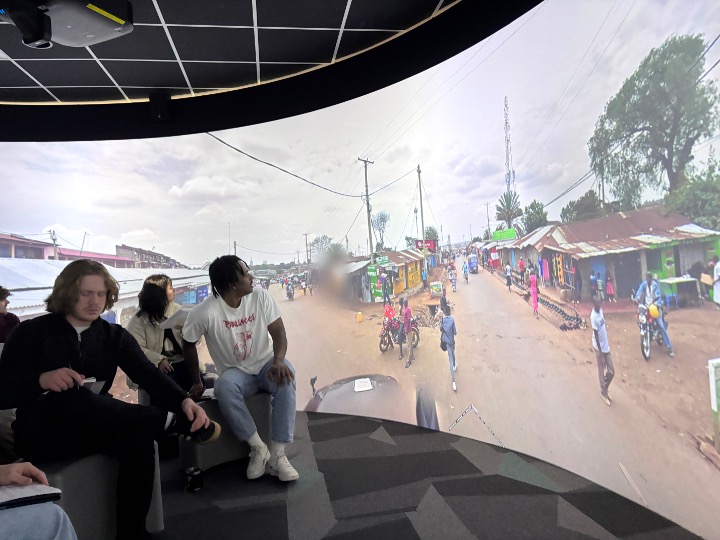
We continued to do our own research that interested us in Kenya. We each found five articles and wrote about what we had learned about each. We finally had come up with our research question: How can healthcare and health information be more accessible in rural Kenyan communities?
Sketches
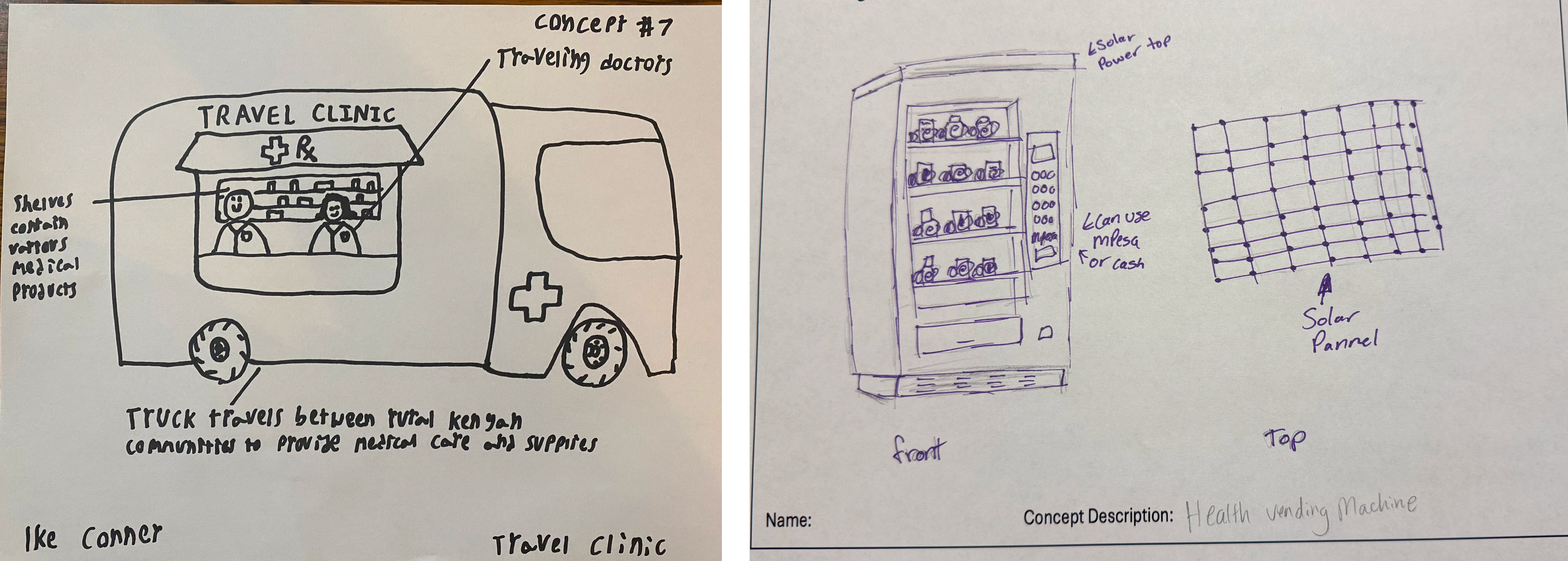
My team and I came up with many different ideas to answer this question. Since we are surrounded by technology we initially came up with a lot of tech-focused ideas. Between apps, sms systems, drones, and health kiosks, we always ended up with the same constraint of people not always having phones or the literacy to understand complex technology. We didn’t want something that takes awhile to learn as it would deter people from using the product. I initially came up with the health care vending machine. This vending machine would be placed in rural areas and powered by solar power. This vending machine would hold simple health products such as cleaning wipe, antibiotics, menstrual products, and other basic health care needs. An issue with this prototype is how the vending machine would stay stocked. The initial sketch is shown below. My other group mates came up with the idea of a mobile health clinic. This health clinic would travel to rural areas with a medical professional to provide medical advice, check ups, and basic health care procedures such as blood draw and vaccines. The sketch of the health clinic is shown below. After discussing with the team we decided on combining the two to make a mobile health care clinic with a vending machine attached to the side.
Low-Fidelity Prototypes
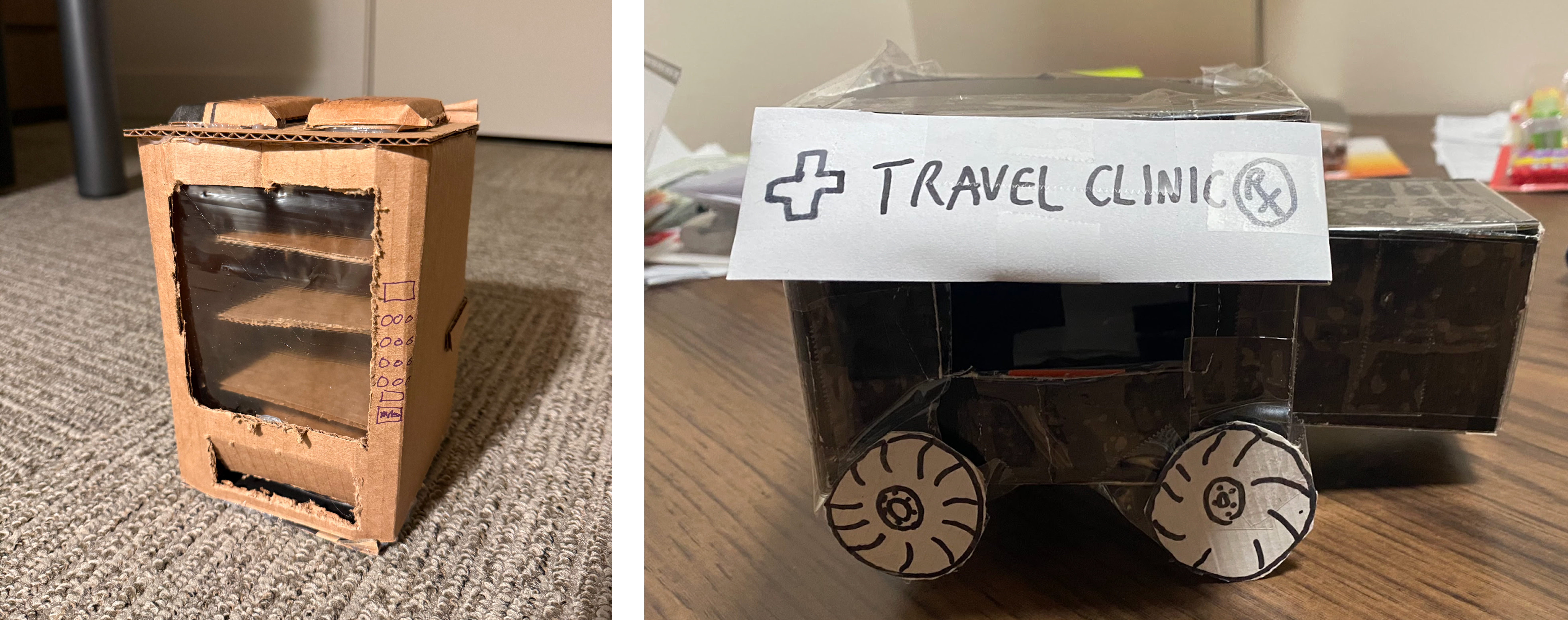
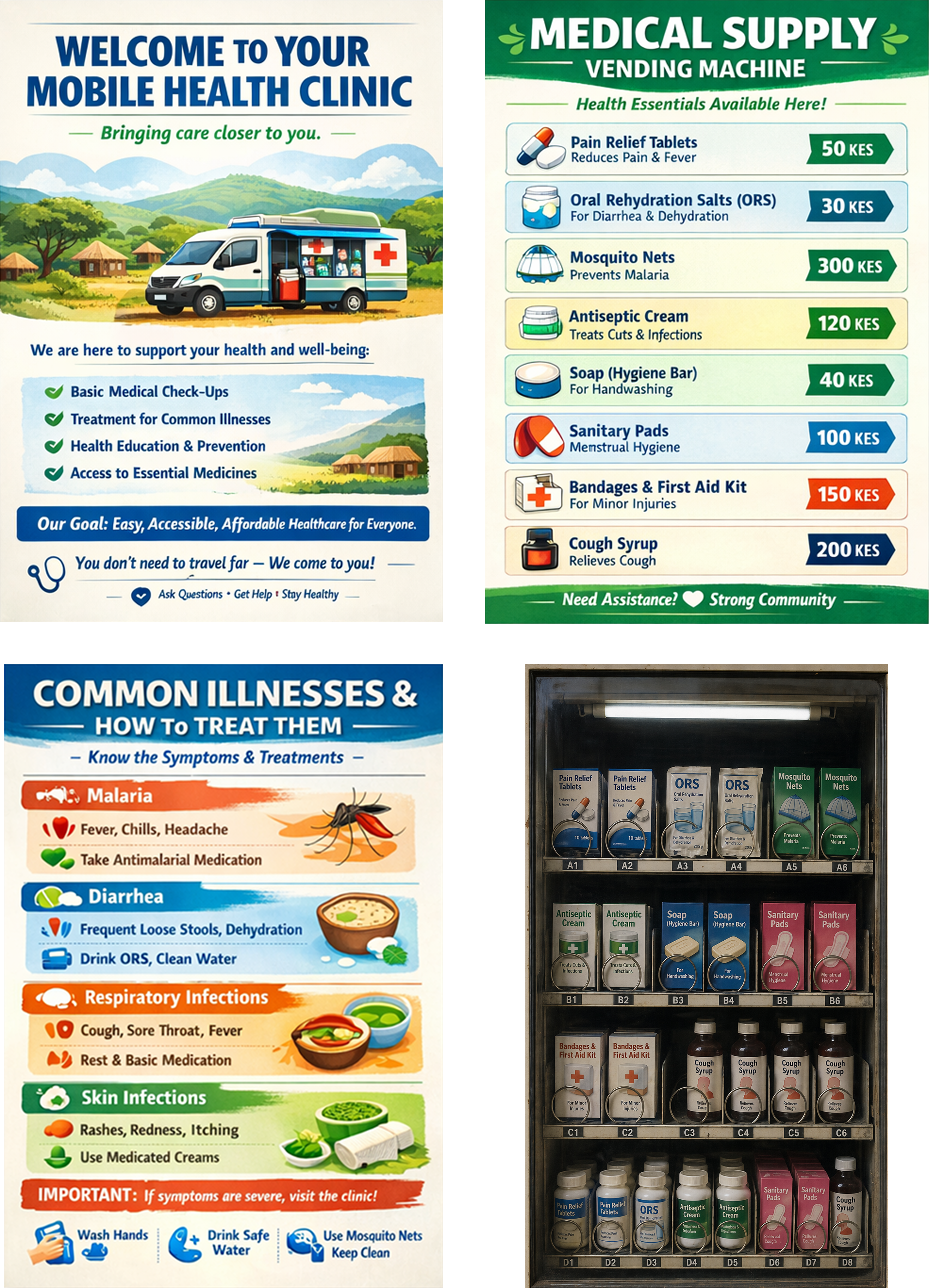
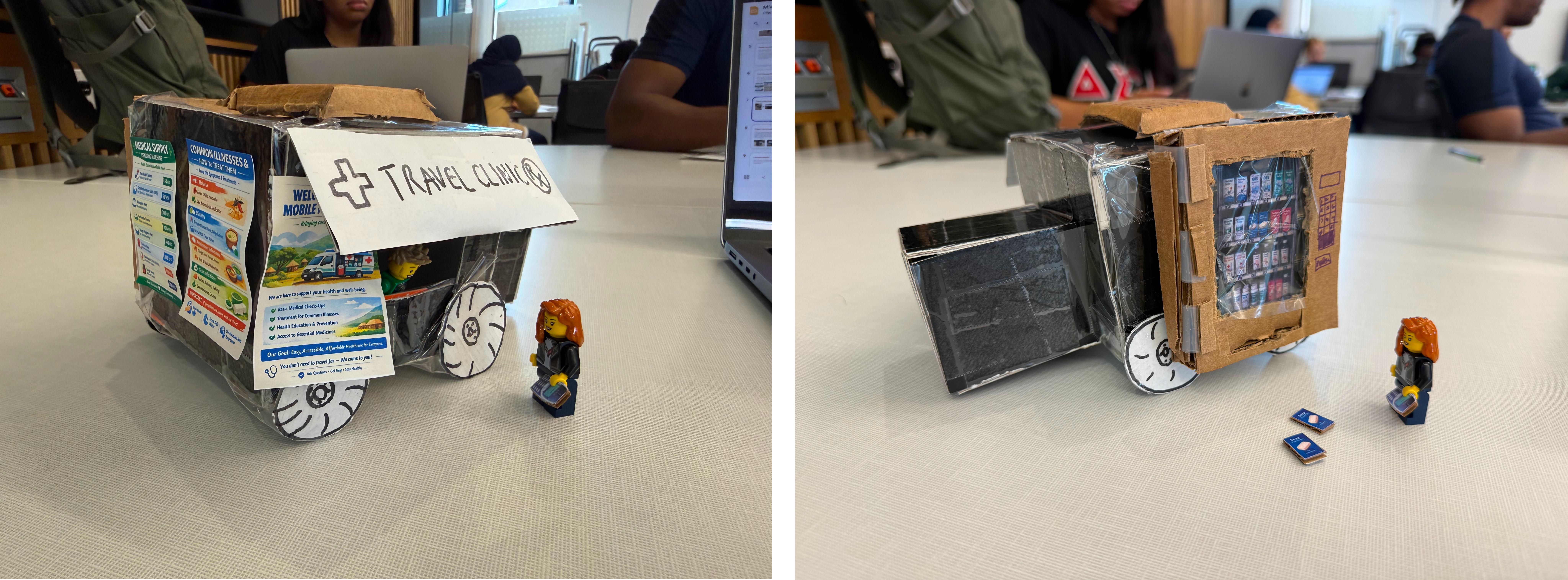
We initially created two separate prototypes then later created a smaller version of the vending machine to attach to the clinic. Prototypes are shown below. After having the final low-fidelity prototype we were able to talk about it with our friends over at Egerton University. We were able to gather helpful feedback on our prototype. A main one was to add informative posters on the side of the clinic. We decided to add three posters to the clinic. One for the medical supplies that were in the vending machine and a short description on it. Another for common illnesses and their symptoms and treatments. After more discussion throughout the semester we also added an image of what the vending machine would look like with the medical supplies in it to the front of the prototype.
Graphics
Each of these images were created by ChatGPT. The prompt for the posters on the side was “I need you to generate three posters. This is for an idea to put mobile health care clinic in rural Kenya. The health care clinic will be on a vehicle where medical professionals can travel to rural Kenya to treat people or inform people about medical information. There will also be a vending machine on the back of the clinic that holds medicine and medical supplies. The three posters need to be as followed, one as a general welcome to the mobile clinic, the second needs to have common illnesses with a short description with symptoms and treatments, then the third needs to be a menu on what is in the vending machine so the name of the item, a short description on what it does and how much it is. does this make sense”. After generating it I asked to make them prettier and generate them as an image so I can download it. The posters are shown below. The prompt for the vending machine front was “This is a poster on what will be offered in the vending machine. Generate an image for a cover screen in can put on the vending machine that shows what they can buy. So like instead of putting individual mini items in the vending machine i can just tape the picture to the front” with the posters of the items in the vending machine attached. After generating it I asked “make it how it would look as if you were looking at the vending machine” and then “make it more realistic and just have the product on shelves. keep it old school”. The final generated image is shown below.
Higher-Fidelity Prototypes
We were able to add the posters and the image of the front of the vending machine to the prototype. We also added a solar panel to the top of the clinic. I was able to find some Lego people to be able to show where the medical profession will stand and a customer using the clinic. After more discussion we also decided that this clinic would be a converted matatu. Matatu’s are minibusses that are used as a primary source of transport in Kenya. This would be easy to obtain since there are many in Kenya already and there is a lot of space in them. The final version of the prototype that we made is shown below.
Evaluation
After creating the final version of the prototype that we made, we were able to talk to 6 Egerton Students and get feedback. The evaluation was set up with us first asking if they were able to tell us what our prototype did. We would show the prototype on Zoom and rotate it so they could see all angles. All were able to understand what the prototype did and were able to tell us that it is a mobile clinic with a vending machine attached. Next we ask if they could understand the posters. Again all were able to understand what the posters were trying to communicate and read them. I have attached the affinity diagram below on the data we were able to collect.
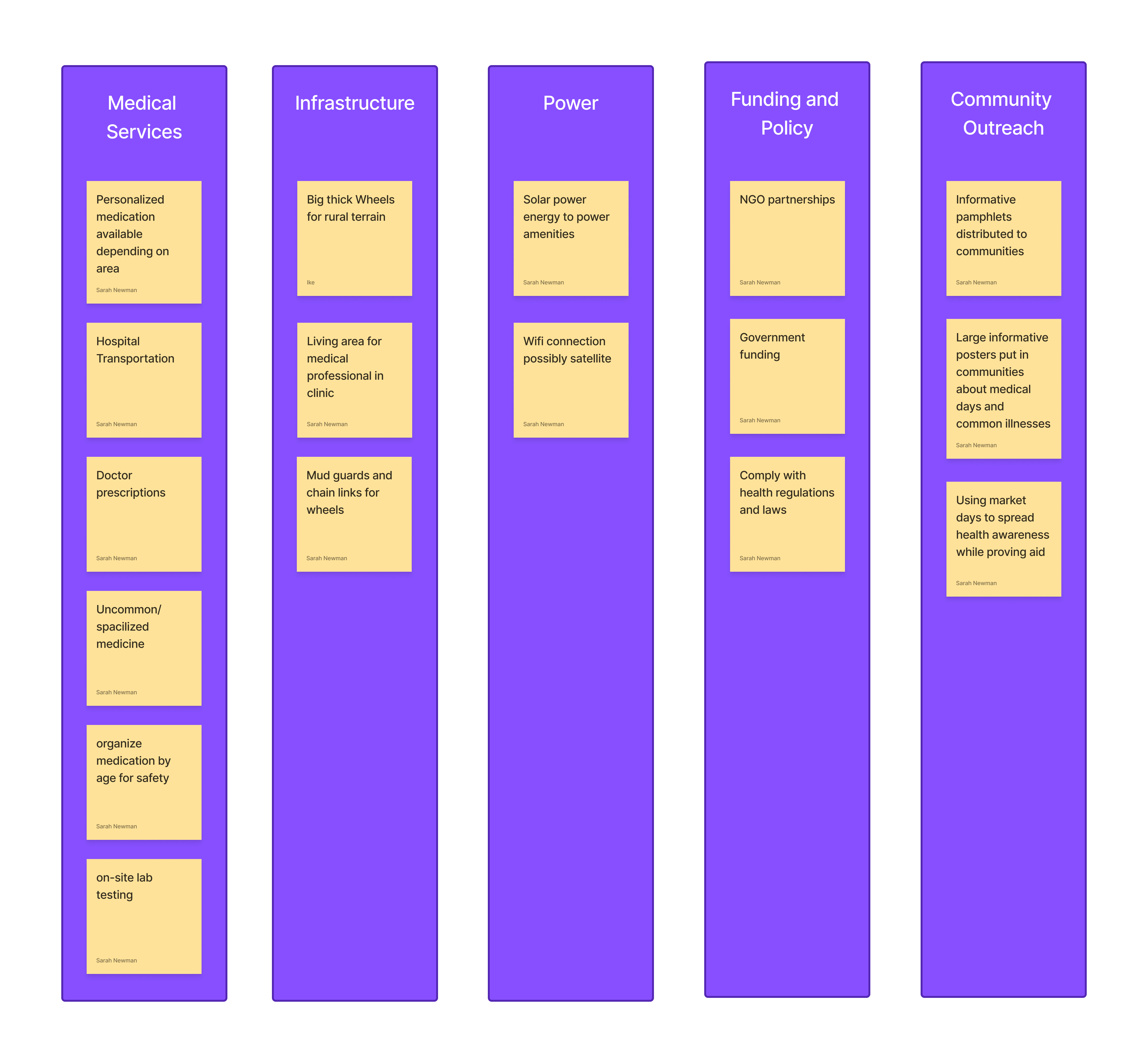
Some highlights included having personalized medicating in the vending machine depending on the region of Kenya it would be visiting. Different areas are struggling with different diseases. Another is utilizing market days as community health days and/or having the day as its own. These days would be used to do vaccinations for a whole community, informational sessions, and overall spreading health awareness for everybody. These days would help get the community gathered as one to increase health literacy as well as make it a community joint effort to get checked up and vaccinated. A highlight for the physical matatu was to add chain links to the wheels. We knew we wanted to have big wheels to be able to handle the rough roads in rural Kenya but adding chain links would add more traction.
Presentation and Final Assignment
Our final assignments included a written report on our prototype and a presentation. Both are shown below.
Further Research
If we had more time and resources we would want to make our prototype bigger. We would continue to show the details of the matatu and the thick wheels for the rough terrain. We also would want to add some medical equipment in the matatu to be able to show the interior design of the clinic. Also having a system to strap all the equipment down is something that needs to be further developed. Improving on the vending machine would be a next step as well. Right now it is just an image showing the items in the vending machine but having individual items in the vending machine would improve the usability of the prototype.